
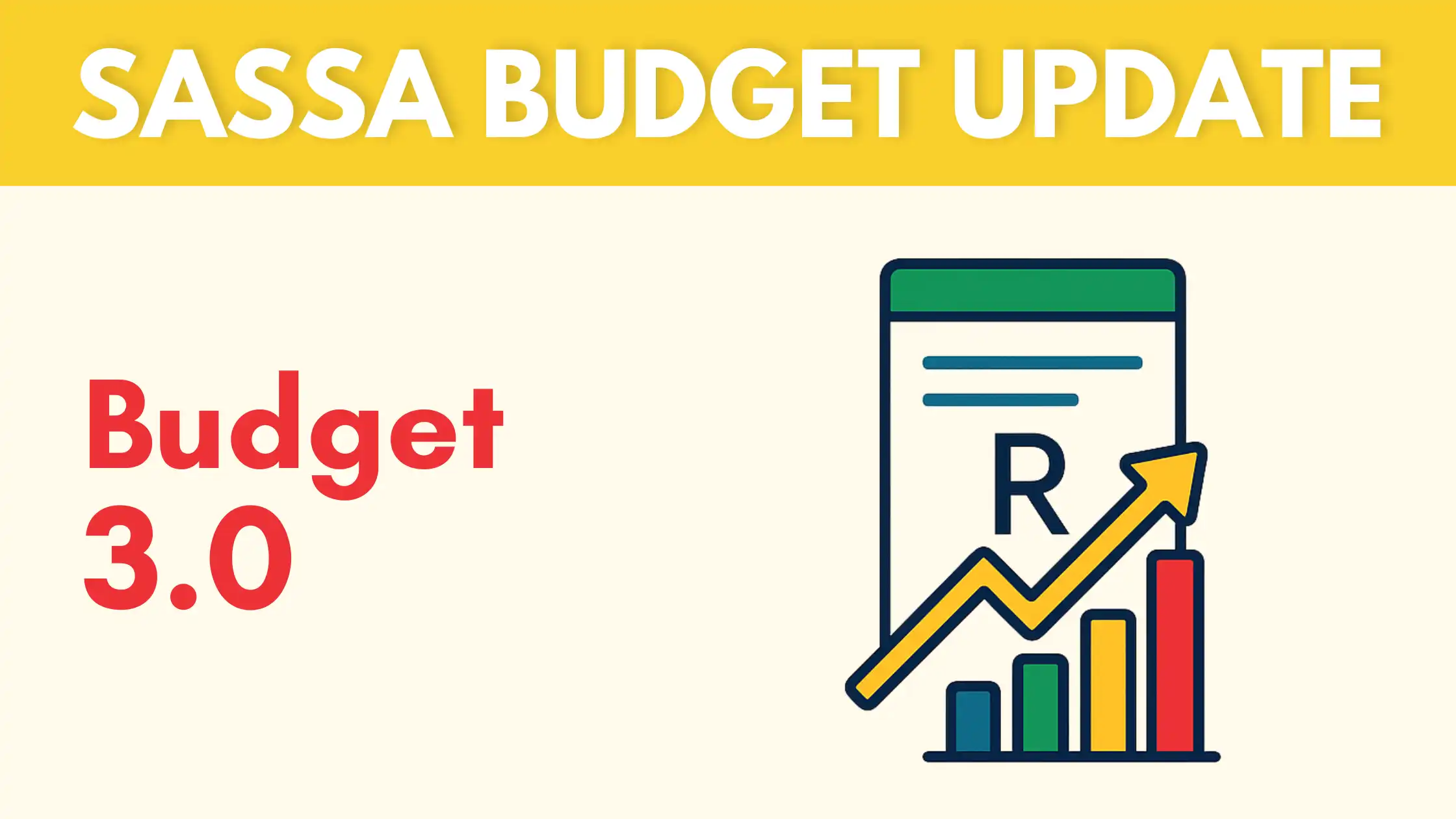

In the National Budget released on May 21, 2025, Finance Minister Enoch Godongwana announced a significant increase in South Africa’s social grant expenditures. The National Treasury states that the number of social grant beneficiaries, except those receiving SRD grants, will increase upto 19.3 million by March 2028.
For the financial year 2025-26, SASSA grant increase by R1.6 billion supports the government’s commitment to provide social and economic welfare programs to the citizens.
Further, the Minister has also announced an allocation of R35.2 billion for the SRD R370 grant, which includes both the monthly payments to beneficiaries and administrative costs. Moreover, the SRD grant has been extended until March 31, 2026, providing continued temporary support to individuals facing financial problems.
What is Budget 3.0 and Why Does it Matter in South Africa?
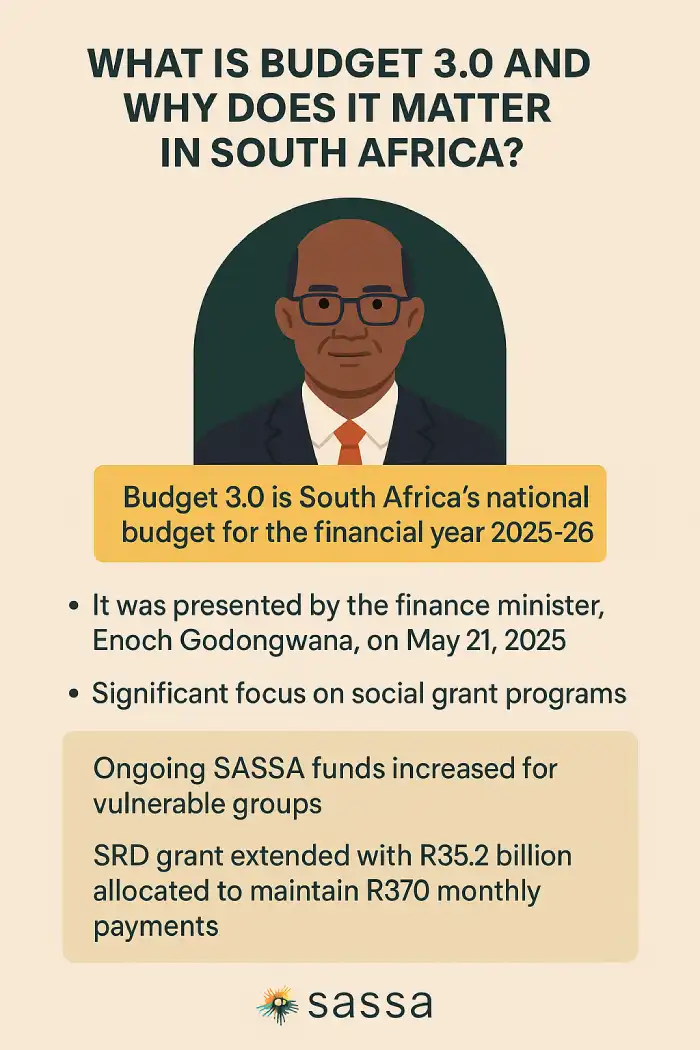
Budget 3.0 is South Africa’s national budget for the financial year 2025-26. It was presented by the finance minister, Enoch Godongwana, on May 21, 2025. The budget 3.0 was again presented in the parliament after getting rejected in the first two versions due to fiscal and political concerns.
A significant aspect of the 2025 budget is its in-depth focus on social grant programs. The finance minister confirmed the increase in ongoing SASSA funds to ensure continued support for vulnerable groups.
Additionally, the SRD grant has been extended until March 31, 2026, with an allocation of R35.2 billion to maintain the current R370 monthly payments per beneficiary.
How Much Does SASSA Grant Increase for the Financial Year 2025-26?
Child Support Grant
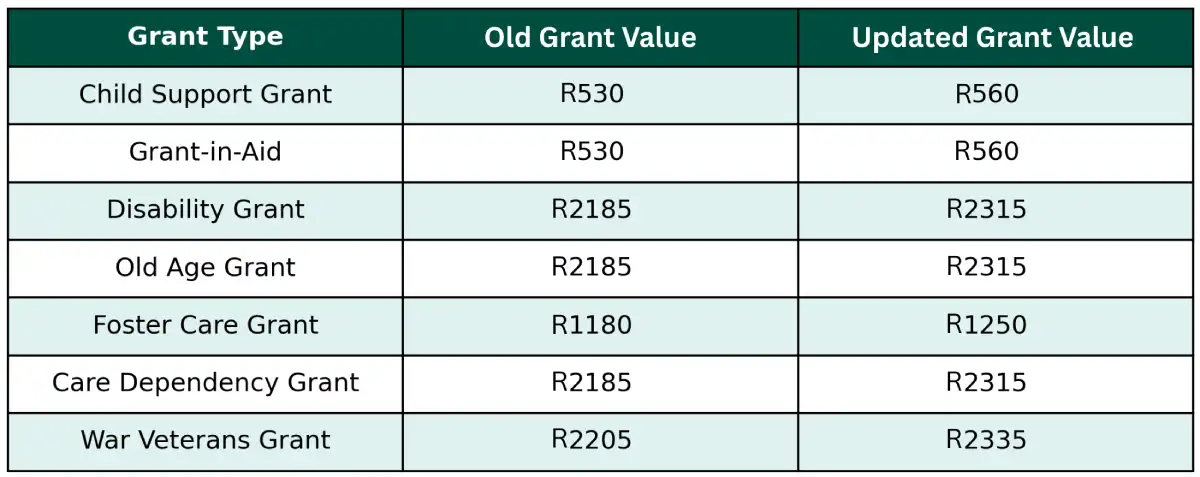
For the financial year 2025-26, the Child Support Grant has increased from R530 to R560 per month. This little increase aims to help caregivers better manage their child’s educational and daily expenses, such as food and clothing. Millions of children rely on the SASSA Child Support Grant across South Africa to improve their children’s quality of life.
Grant-in-Aid
The SASSA has announced an increase in Grant-in-Aid from R530 to R560 for 2025-26. This grant is specifically offered to SASSA beneficiaries who are unable to manage their routine tasks due to any physical or mental disability. So, the recipients get an extra amount monthly apart from their regular monthly grants to cover the cost of hiring the caregivers.
Disability Grant
The Budget 3.0 for Financial Year 2025-26 has announced a rise in Disability Grant from R2185 to R2315 to help differently abled individuals better cope with the rising cost of living. By providing a major cover for medicine, transport, or daily expenses, this grant is a huge support for those who are unable to work due to long-term physical or mental illnesses.
Old Age Grant
The Old Age Grant for the financial year 2025-26 has increased from R2185 to R2315 per month. This increment shows the government’s commitment to supporting elderly citizens over the age of 60 years. Moreover, with the rising inflation, the increase in the Old Age Grant helped beneficiaries manage their cost of food, medicine, and residence more comfortably.
Foster Care Grant
The Foster Care Grant has increased from R1180 to R1250 for 2025-26. This grant is provided to the legal caregivers for their foster children to cover their routine expenses, such as diet, clothing, medicines, and education. The increase helps relieve the financial pressure from the families taking care of foster children and providing them a better quality of life.
Care Dependency Grant
SASSA offers a Care Dependency Grant to those parents or guardians who have to take care of a disabled child. Such a child needs full-time special care for which their guardians have to hire a person for assistance. The Care Dependency Grant has now increased from R2185 to R2315 per month due to a sudden rise in inflation in 2025-26.
War Veterans Grant
The War Veterans Grant is provided to the South African military persons who served in a war. The South African Social Security Agency (SASSA) announced an increase in the War Veterans Grant from R2205 to R2335 in the 2025 budget. Though the number of recipients is small, the rise shows ongoing respect and acknowledgment for their services.
SASSA Grant Increase and SRD Extension in Budget 3.0
In his 2025 budget speech, Finance Minister Enoch Godongwana announced the extension of the Social Relief of Distress Grant (SRD) until March 31, 2026. To support this extension, the National Treasury declared to allocate R25.2 billion, ensuring continued monthly assistance for all eligible recipients.
In addition to the extension, the government is exploring ways to link the SRD grant with employment opportunities. Proposed ideas include introducing a job seeker’s allowance or incorporating the grant into the review of Active Labour Market Programmes.
These efforts help empower South African citizens and build a more sustainable future through social and economic support.
No Tax Break for Vulnerable Groups
Vulnerable groups will no longer receive a tax break on extra food items, as Finance Minister Enoch Godongwana has announced to remove this benefit.
This change comes after the government dropped its earlier plan to increase VAT. As a result, low-income households may face higher food costs since these items will now be fully taxed.
Many people had hoped for continued relief in basic living expenses, but this ‘No Tax Break’ aspect added extra pressure on struggling families.
Impact of Inflation on SASSA Grant Increase
Since inflation has significantly reduced the purchasing power of money, even the increase in grant amounts may not provide much financial relief to beneficiaries. In the 2025 budget 3.0, the South African government has taken a step forward to relieve some financial pressure by raising social grants. However, the cost of living, including food, medical care, and transport, continues to worry low-income families. Therefore, vulnerable households may not get enough relief from this increase.
Beneficiaries’ Stance on Grant Increase
Due to rising inflation in the country, millions of SASSA grant recipients are trying to achieve a better living in terms of food, residence, and healthcare. Though the government’s effort is appreciated, many people believe that long-term solutions are necessary to achieve financial stability.