
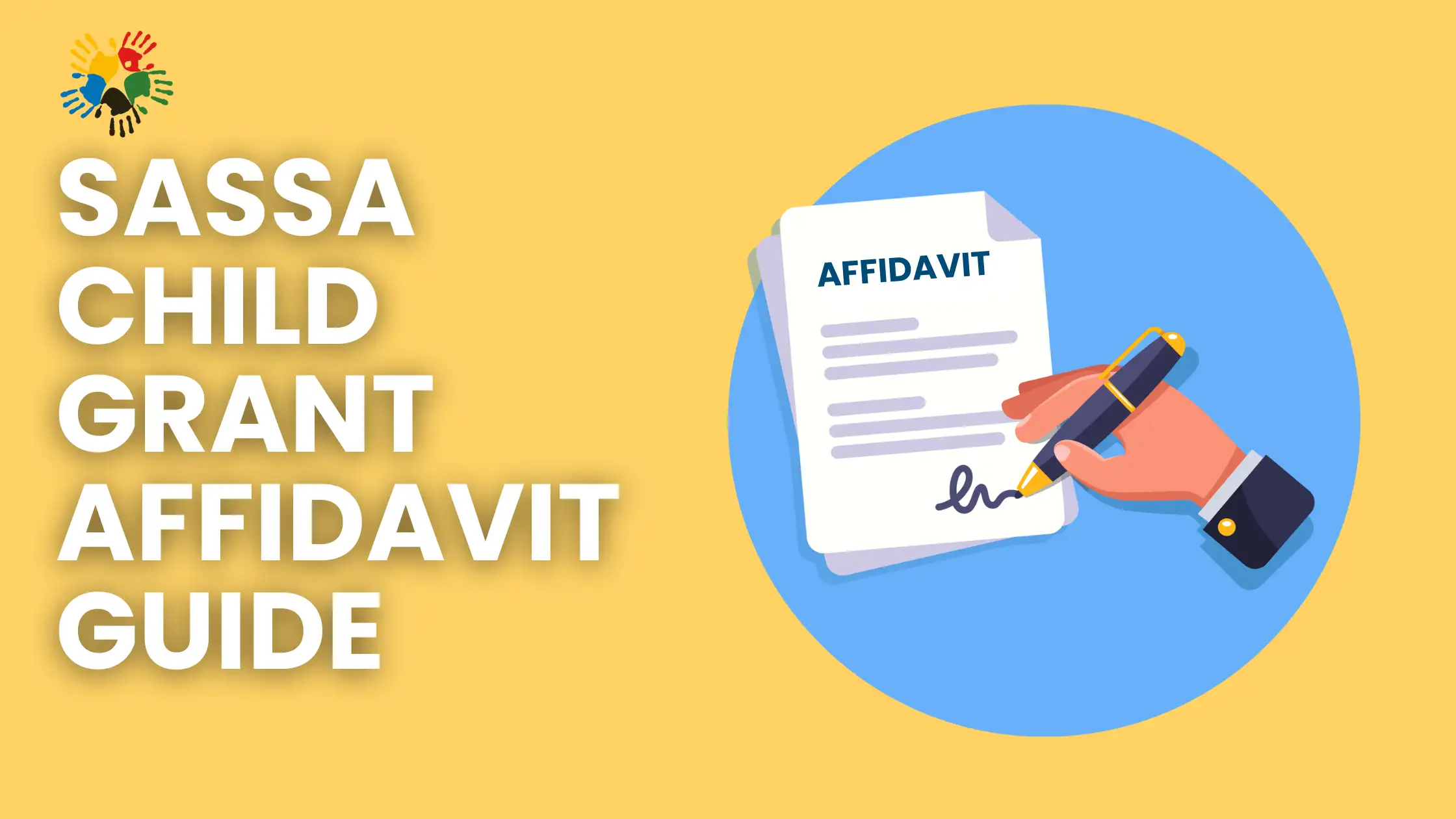

An affidavit is a legal document used to affirm the truthfulness of a statement made by an individual or organization. It is typically required to validate an application or procedure, thus enhancing its credibility.
When applying for the SASSA Child Support Grant, submitting an affidavit is a legal requirement. Applicants must provide accurate and complete personal information as a formal declaration.
Details, such as your personal information, marital status, and source of income, must be stated correctly in the affidavit form to ensure the acceptance of your application.
If you’re applying for the South African Social Security Agency’s grant but don’t know how to write affidavit for SASSA Child Grant, here is a quick guide! Follow each step carefully to fill the affidavit as per the SASSA’s guidelines.
Where to Get an Affidavit Form for SASSA Child Support Grant?
Applicants for the Child Grant can download the official affidavit form from the Download Form Center on the SASSA website here or obtain a copy from the nearest SASSA office.
Although various affidavit templates are available online, it is essential to use the SASSA-approved format, designed keeping in view the specific requirements.
So, it's recommended that you get an affidavit for the SASSA Child Fund from the official website or visit the office in person.
How to Write Affidavit for SASSA Child Grant? Key Sections Explained
There is a SASSA-approved PDF format for Child Grant affidavit that includes some important sections to cover. As an applicant, you are legally required to fill out this declaration truthfully to avoid the risk of your application being rejected. Below is a detailed overview of the key sections included in the 2025 Child Grant Affidavit and the correct way to fill out this form!

Personal Information
The first section of the affidavit requires your personal details, including your surname, full name, 13-digit Identity Document number, physical address, age, and postal code.
In addition to your information, you must also mention specific details about the child, such as name and surname, date of birth, the name of the clinic or hospital where the child was born, and the ID number (if available).
If you’re applying for more than one child, you may attach a separate list with each child’s relevant details. Ensure that all information provided is accurate, authentic and truthful, as any false declaration may lead to the rejection of your application.
Marital Status
In this section, you must declare that you are the child’s primary caregiver or biological parent and that the child lives with you and is not under the care of a state institution. You should also confirm that you are not receiving any payment for caring for the child.
Next, indicate your marital status by selecting the appropriate option in the form.
-
If married, specify the type of marriage:
-
In community
-
Out of community
-
Civil Union
-
Customary Union
-
Asiatic Religion
-
If unmarried, choose any of the following:
-
Never married
-
Divorced
-
Widow/widower
-
Deserted for more than 3 months
If the applicant is divorced or a widow (er), he/she must provide the ID, full name and surname of the ex-spouse too. However, if you are unable to provide these documents, you must clearly state the reason for their unavailability in the affidavit.
Source/Type of Income
This is one of the most critical sections of the affidavit, and mistakes are a common reason for the rejection of applications. It is essential to fill out this part carefully and accurately.
Here, mention the amount received by you, your dependent child, and your spouse. Include all sources of income, such as:
-
Salary or Wages
-
Profits or Benefits from a business
-
Pension or retirement funds
-
Rental income
-
Income from an international organization
-
Returns from personal assets
If you or your spouse currently don’t have any income source, you must clearly explain how you manage your expenditures. Providing this information is essential, as it helps SASSA understand your financial situation and assess your eligibility for the Child Support Grant. You can also check SASSA SRD Requirements to better understand the requirements clearly.
Note: Be transparent and honest when declaring your earnings, as any false or missing information may lead to your application being declined.
Declaration
Once you have completed the affidavit, you are required to affirm your declaration under oath in the presence of Commissioner of Oaths.
As the deponent (the person making the statement), you must sign the document, confirming that all the information provided is true and accurate to the best of your knowledge.
The Commissioner of Oaths, may be a magistrate, police officer, or a reputable government official, will complete this section by mentioning his name and official rank, signing the declaration, and applying the official stamp to formally validate the document.
Where to Submit SASSA Affidavit for Child Support Grant?
After duly signed and stamped by both the applicant and the Commissioner of Oaths, an affidavit will finally be submitted to the SASSA office. You can locate the nearest branch or find nearby locations by visiting the official website, sassa.gov.za.
Make sure to attach all required supporting documents with the declaration, including:
-
Identity Documents
-
The Child Birth Certificate
-
Payslips or other proof of income
-
Proof of residence in the form of a recent utility bill or a councilor’s note
-
The Death Certificate, if one or both parents are deceased
Alternatively, the applicants can also submit the affidavit for SASSA Child Grant online through the official SASSA portal. Make sure to keep a copy of the submitted affidavit and attached documents for future correspondence.
If your application still remains pending, you can learn how to fix SASSA SRD Pending Status from here.
Why SASSA Requires Affidavit to Approve the Child Grant?
The South African Social Security Agency (SASSA) is a reliable and trusted institution committed to ensuring the physical and mental well-being of its beneficiaries. It guarantees the transparency and integrity of all grant-related procedures in the South Africa.
An affidavit for the SASSA Child Grant serves as a legal document and a sworn declaration between the caregiver and the agency, affirming their mutual responsibility to support the holistic development of the child, both physically and mentally.
What SASSA ensures through Child Grant affidavit is:
-
The applicant is either the biological or non-biological parent of the child.
-
The applicant is the primary caregiver and is not receiving any payment for the child’s care.
-
The child is not under the care of the state institution.
-
The primary caregiver is financially unable to fully support the child.
-
All supporting documents submitted are authentic and valid.
-
The affidavit confirms the identity of the child and clarifies the caregiver’s relationship with the child.